
WOMEN'S GOLF · PHYSICAL PERFORMANCE
BUILD STRENGTH. UNLOCK POWER.
>Women’s golf performance training should develop strength, power, speed and mobility while taking into account each golfer’s individual profile, training history and the physiological factors that may influence her progress.Developing them, however, should take into account each golfer’s individual profile, training history and the physiological factors that may influence her progress.
STRONGER. FASTER. BUILT FOR HER GAME.
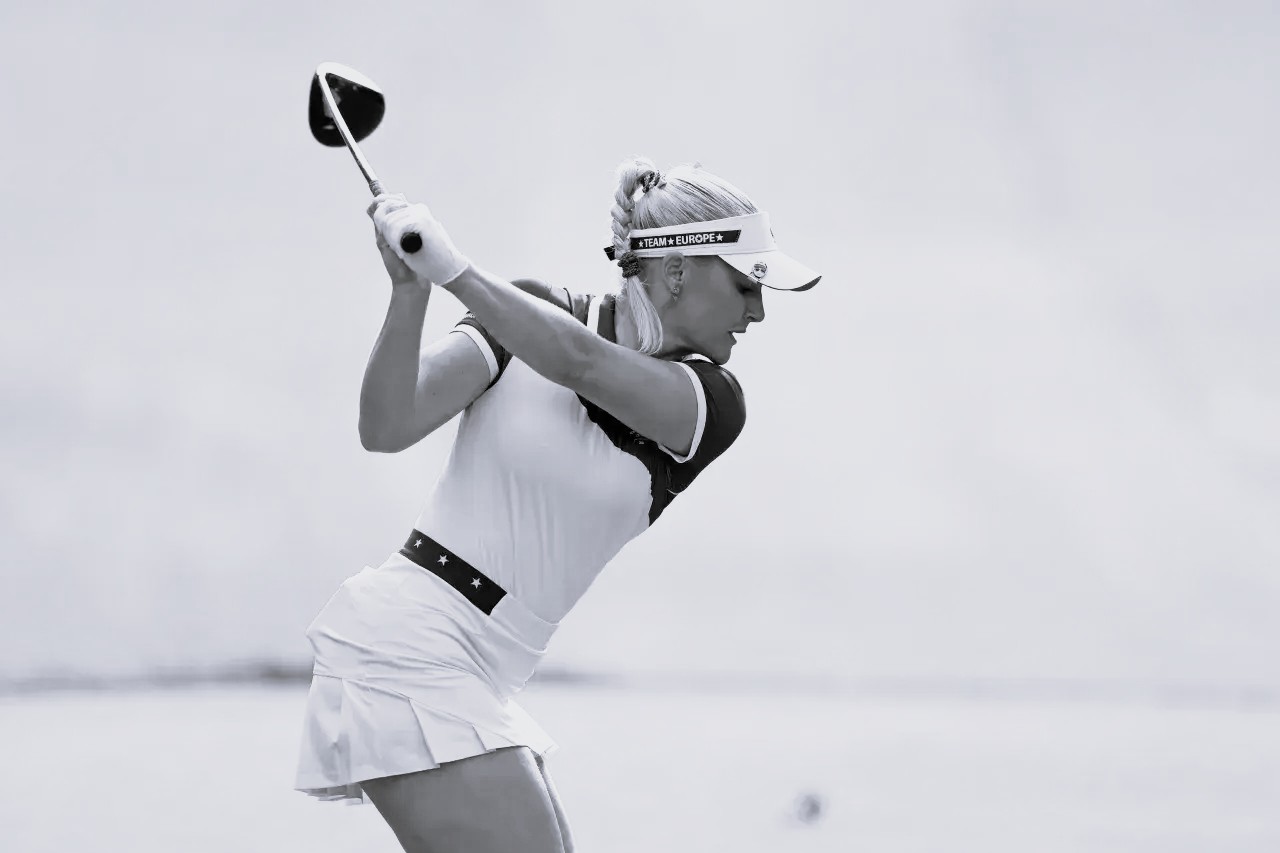
TRAINING THE FEMALE GOLFER
THE SAME PERFORMANCE DEMANDS. DIFFERENT FACTORS TO CONSIDER.
Women’s golf performance training pursues the same goals: developing strength, power, speed and movement quality. However, certain anatomical, physiological and hormonal factors may influence how an athlete responds to training. The goal is not to train women differently by default, but to individualize when their profile requires it.
01
STRENGTH & POWER
Developing strength and the ability to produce it quickly is a major driver of greater speed and distance.
02
MOBILITY & CONTROL
More mobility does not always mean better performance. Some athletes need greater stability, control and the ability to produce force throughout their available range of motion.
03
CYCLE & TRAINING RESPONSE
The menstrual cycle does not automatically dictate the training program. When symptoms affect energy, recovery or training quality, they become useful information for adjusting the workload.
04
INDIVIDUALIZE
Age, level, strength-training experience, injury history, goals and life stage all influence priorities. The program should evolve with the golfer.
INDIVIDUALIZING DOESN'T MEAN DOING LESS. IT MEANS TRAINING MORE PRECISELY.
PROGRAMMING OVER TIME
THE BODY EVOLVES. SO DO THE PRIORITIES.
A 20-year-old golfer, a new mother and a woman going through perimenopause may pursue the same performance goals without facing the same demands or priorities. Training should be able to evolve with them.
01
CYCLE & SYMPTOMS
The menstrual cycle does not impose a universal training calendar. When it genuinely affects energy, symptoms or recovery, it becomes another piece of information that can help guide intelligent workload adjustments.
02
PREGNANCY & RETURN TO TRAINING
Pregnancy and the postpartum period temporarily change physical demands. The return to performance should be progressive, individualized and coordinated with medical care when appropriate.
03
PERIMENOPAUSE & MENOPAUSE
At this stage of life, maintaining and developing muscle mass, strength, power and recovery capacity becomes particularly important for long-term performance.
THE GOAL DOESN'T CHANGE: BUILD THE PHYSICAL CAPACITIES THAT SUPPORT BETTER GOLF.
AN INDIVIDUALIZED APPROACH
NOT A “WOMEN'S PROGRAM.” A PROGRAM BUILT FOR HER.
Effective women’s golf performance training should start with what the golfer can produce today, what she wants to develop and the demands that are specific to her. Certain physiological factors may change the priorities; they never replace individual assessment.